
DB WP Rarities Recap August 2026
6 september 2026 · Eduard Sangster & Wim Wiegant · 2316 × bekeken

August produced many highlights across all parts of the WP, with a great mix of long-stayers, summer visitors, early autumn arrivals and complete surprises. Let's dive in deep ...!
Overview
Azores
Although the real action will kick off in late September, the season has already started in the Azores. No fewer than seven Least Sandpipers were present on Pico and Terceira in early August, with a Semipalmated Plover and a Wilson’s Snipe also on Terceira. Three Sooty Terns were recorded near Graciosa.British Isles
On 13 August, a Yellow-throated Warbler was discovered at the harbour docks of Liverpool. The bird was in a restricted-access area and could not be relocated after 15 minutes. This would be only the second record for the WP, following Corvo, Azores in 2013. If accepted, and that is quite a complicated matter. It is possible that the bird arrived on a ship from New Orleans. It may also belong to the subspecies dominica, which appears to have less vagrancy potential. Nothing is certain, making this a nice challenge for the British rarities committee. 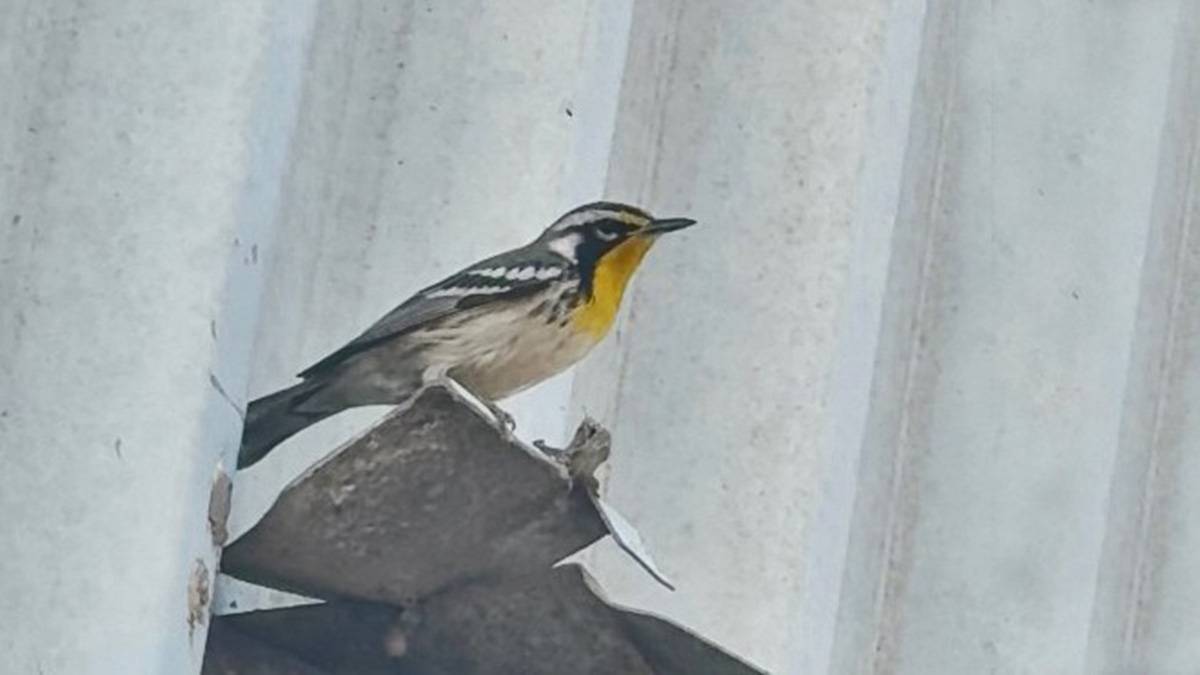 Yellow-throated Warbler Setophaga dominica, Liverpool, England, 13 August (James Conlan)
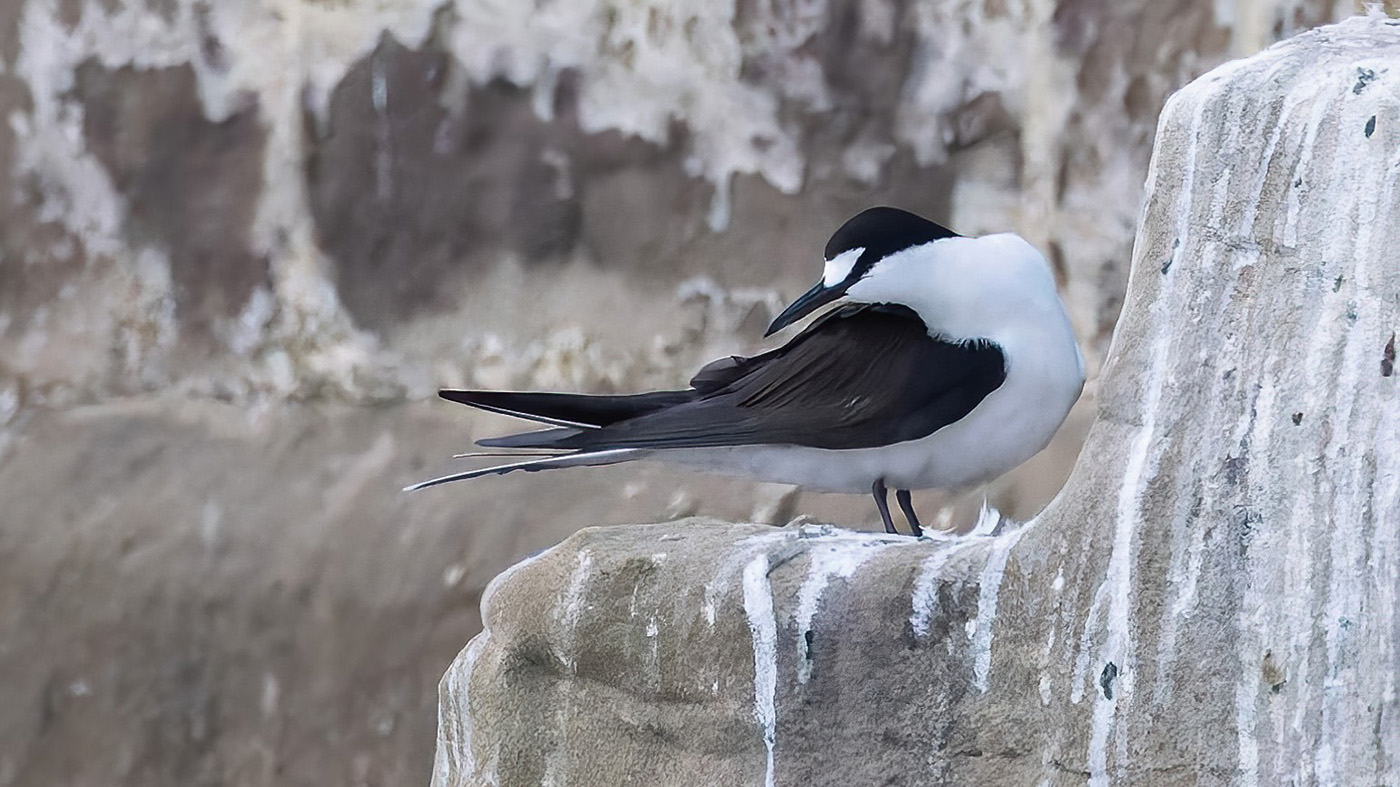 Sooty Tern Onychoprion fuscatus, Coquet Island, England, 3 August (Tom Tams)
The American Black Tern was last seen on Coquet Island on 14 August. An Elegant Tern was present at Kerry, Ireland, since 27 August. American songbirds in Europe in August appear to become a new phenomenon, as the unusually early record of a White-throated Sparrow on the Isle of May, Scotland, from 5 August onwards demonstrates. This is only the second August record among the approximately 60 records of this species in the UK. South Polar Skuas are being recorded increasingly often in Europe, but three birds along the Irish coast on 18-19 August was still exceptional. These represented the third, fourth and fifth records for Ireland. The increase is thought to be largely due to improved knowledge to identify the species.
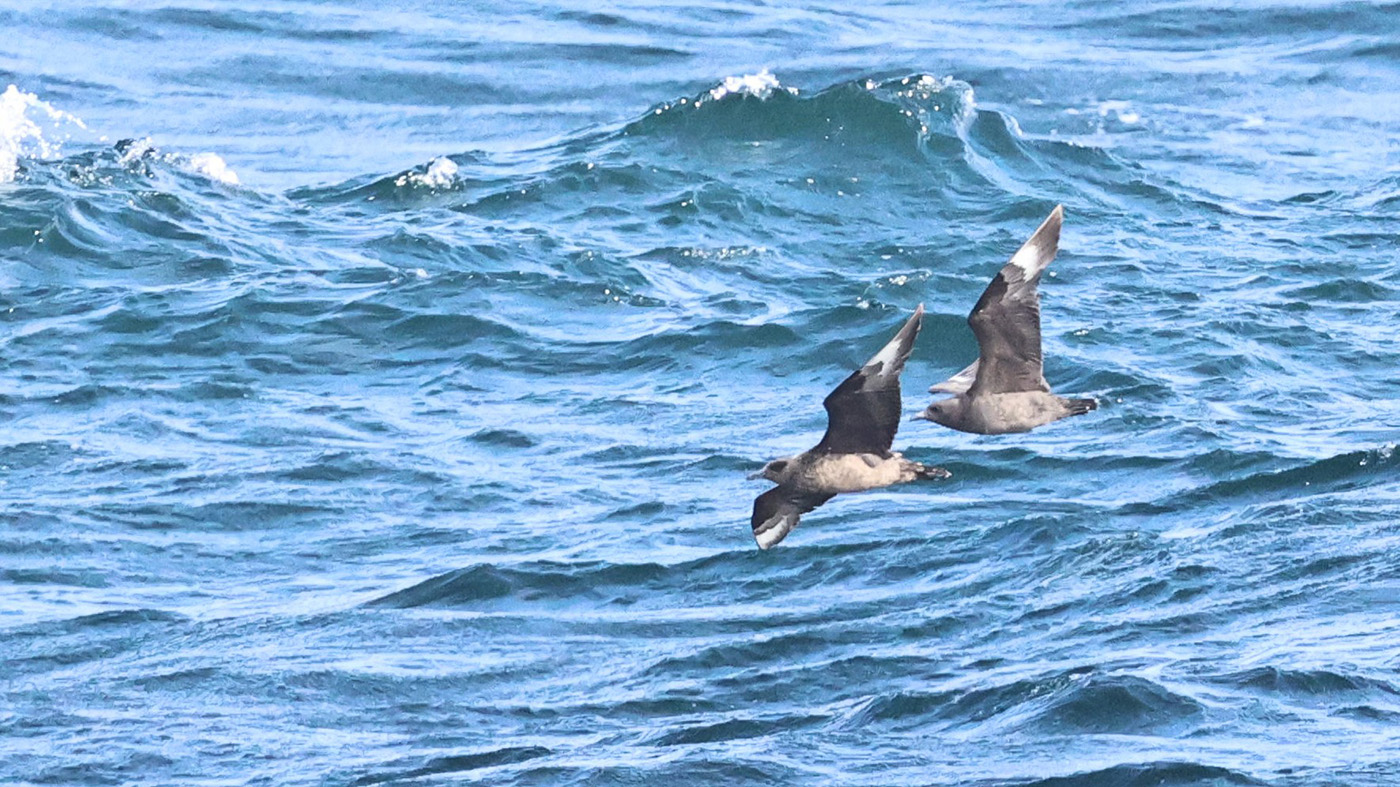 South Polar Skua Stercorarius maccormicki (right), with Great Skua Stercorarius skua, Bridges of Ross, Ireland, 19 August (Cian Cardiff)
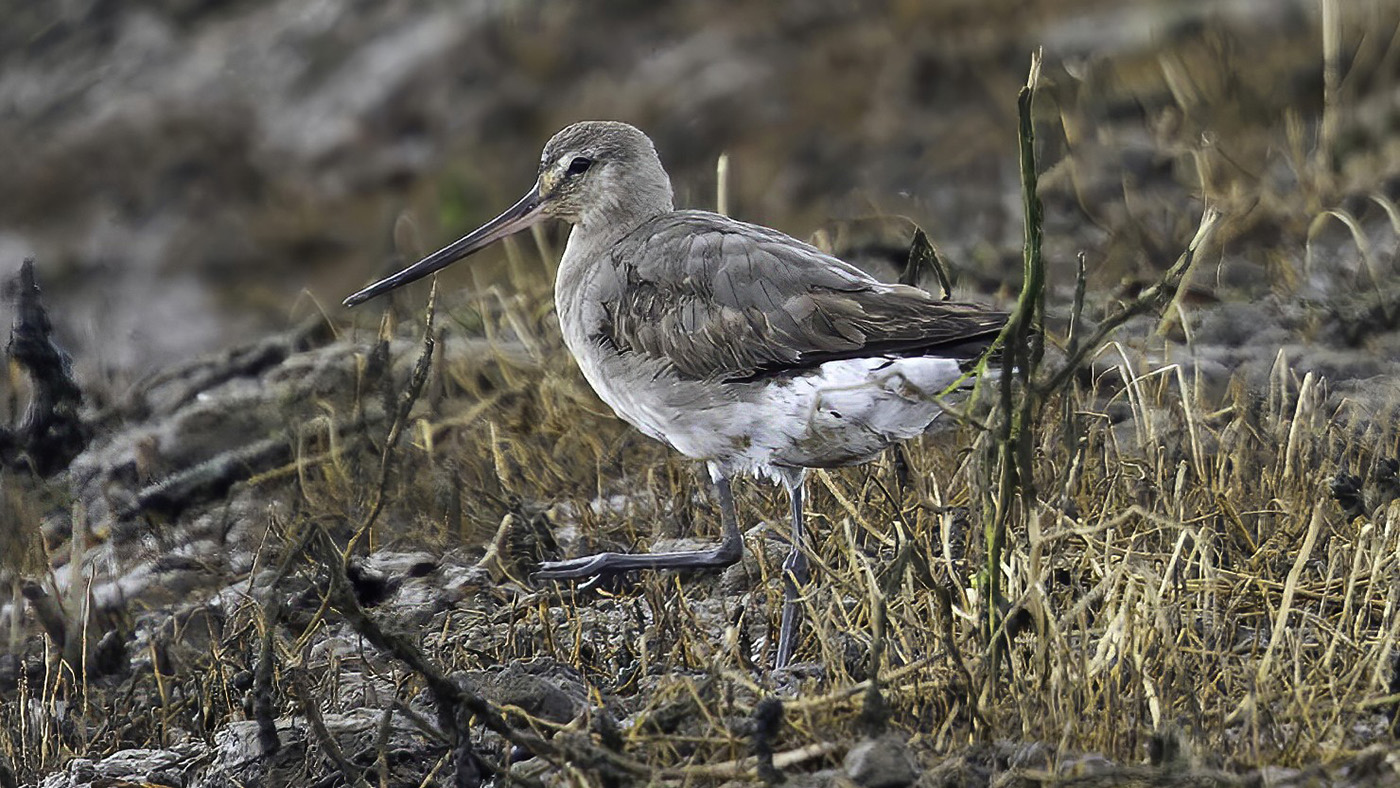 Hudsonian Godwit Limosa haemastica, Cattawade, England, 19 August (Sean Nixon)
Northern Europe
In Iceland, an American Coot was present at the remote Víkingavatn from 5-13 August. The American Tree Sparrow remained until 7 August. Norway’s second Tibetan Sand Plover was seen near Nærland from 11-16 August. 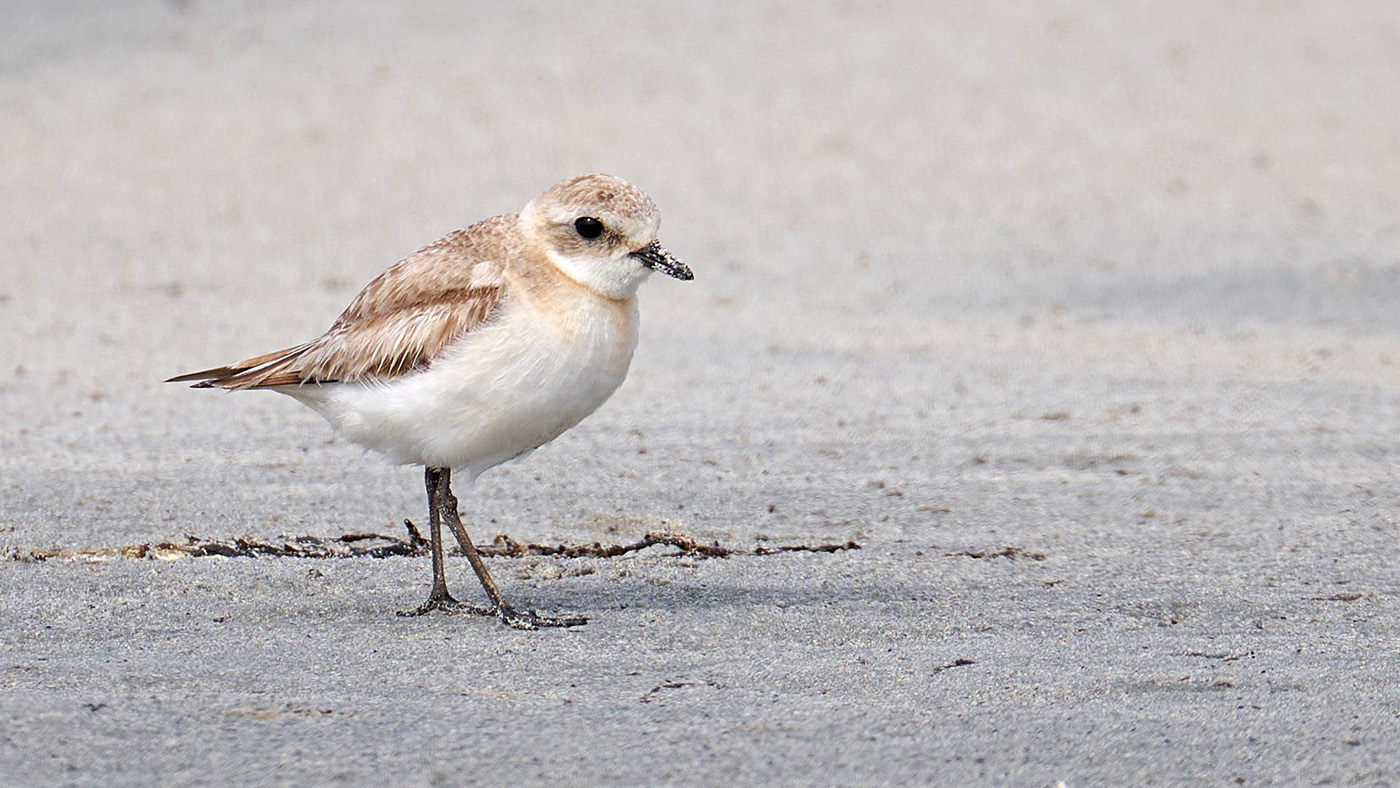 Tibetan Sand Plover Anarhynchus atrifrons, Nærland, Norway, 12 August (Lars Tore Gustavson)
Norway produced some further highlights, including the country’s second Lesser Spotted Eagle north of the Arctic Circle on 9 August, and a fine Oriental Pratincole that had been present since late July on Værøy. Denmark’s eighth Dark-eyed Junco had been present near Næstved since late July. A Spanish-ringed Cinereous Vulture had quite an adventure in Denmark in July, where it has since been accepted into Category A, before it decided to cause a stir in Sweden. The bird was seen near Örsundsbro from 1 August, constituting the second record for Sweden. Juvenile Saker Falcons were seen on Öland on 31 July and at Falsterbo on 26 August. If accepted, these would constitute the first records for Sweden. Previous sightings involved presumed escapees. While the Netherlands is still waiting for its first twitchable Lesser Kestrel, a Dutch top finder casually discovered one on Öland, Sweden, on 14 August.
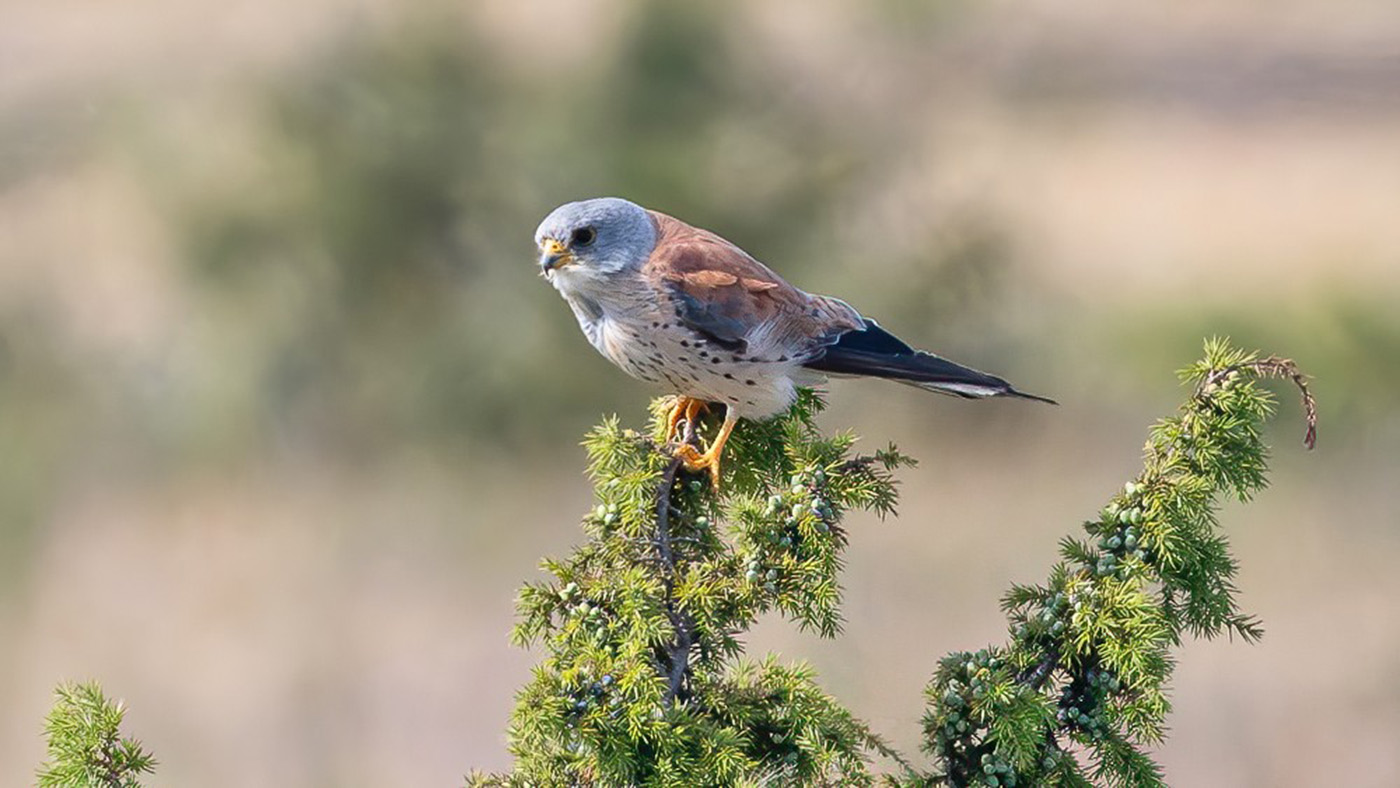 Lesser Kestrel Falco naumanni, Öland, Sweden, 14 August (Diederik Kok)
Finnish twitching luck struck on 14 August when a Masked Shrike was discovered at Virolahti in southern Finland. The only previous record concerned a bird back in 1982.
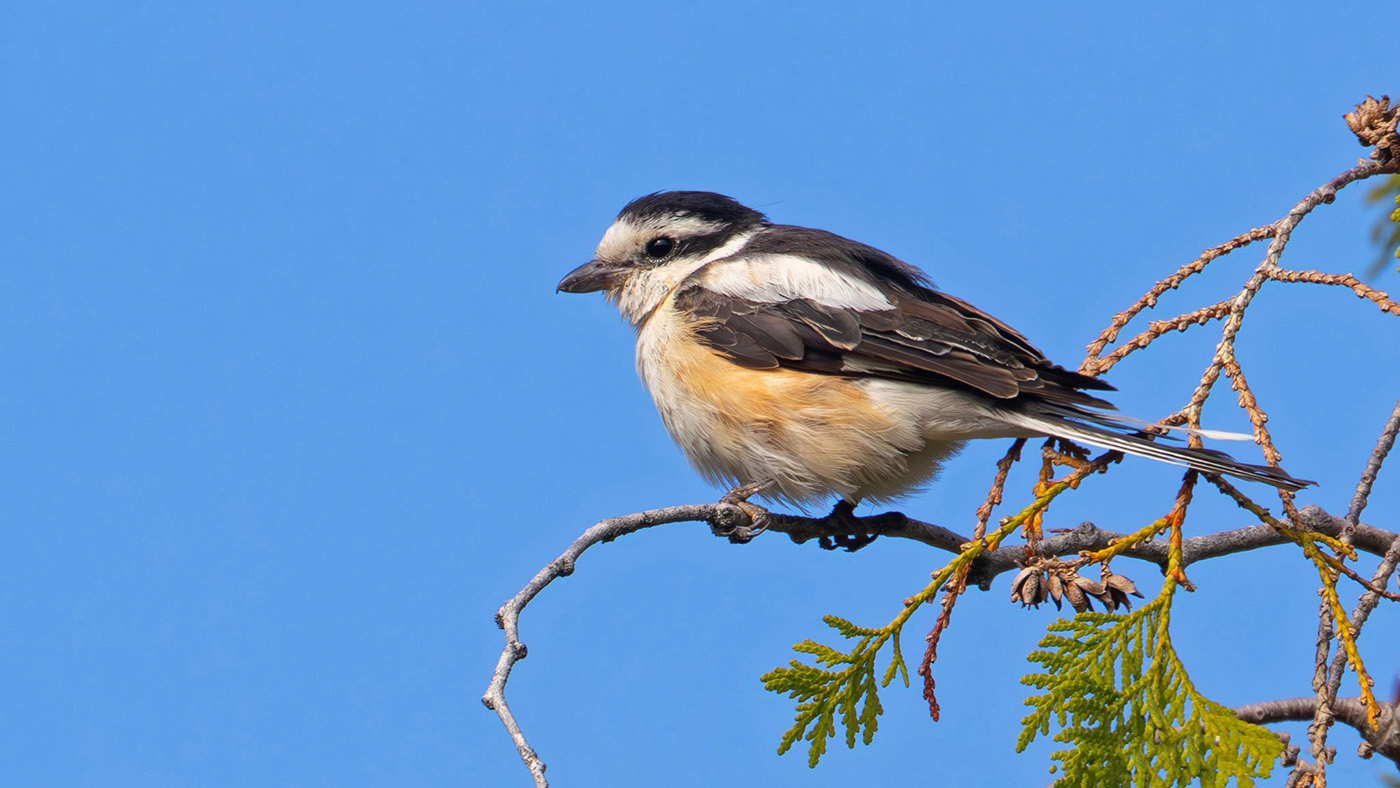 Masked Shrike Lanius nubicus, Virolahti, Finland, 14 August (Petteri Hytönen)
Central Europe
There was a possible second for Germany with a potential wild Demoiselle Crane seen in Dömitz, Germany since 30 August. Belgium had a great month, with a moulting adult Pallas’s Gull flying past Lier on 30 August, which would be the fourth record if accepted. The popular Belgian Least Sandpiper remained at Uitkerke until 4 August. 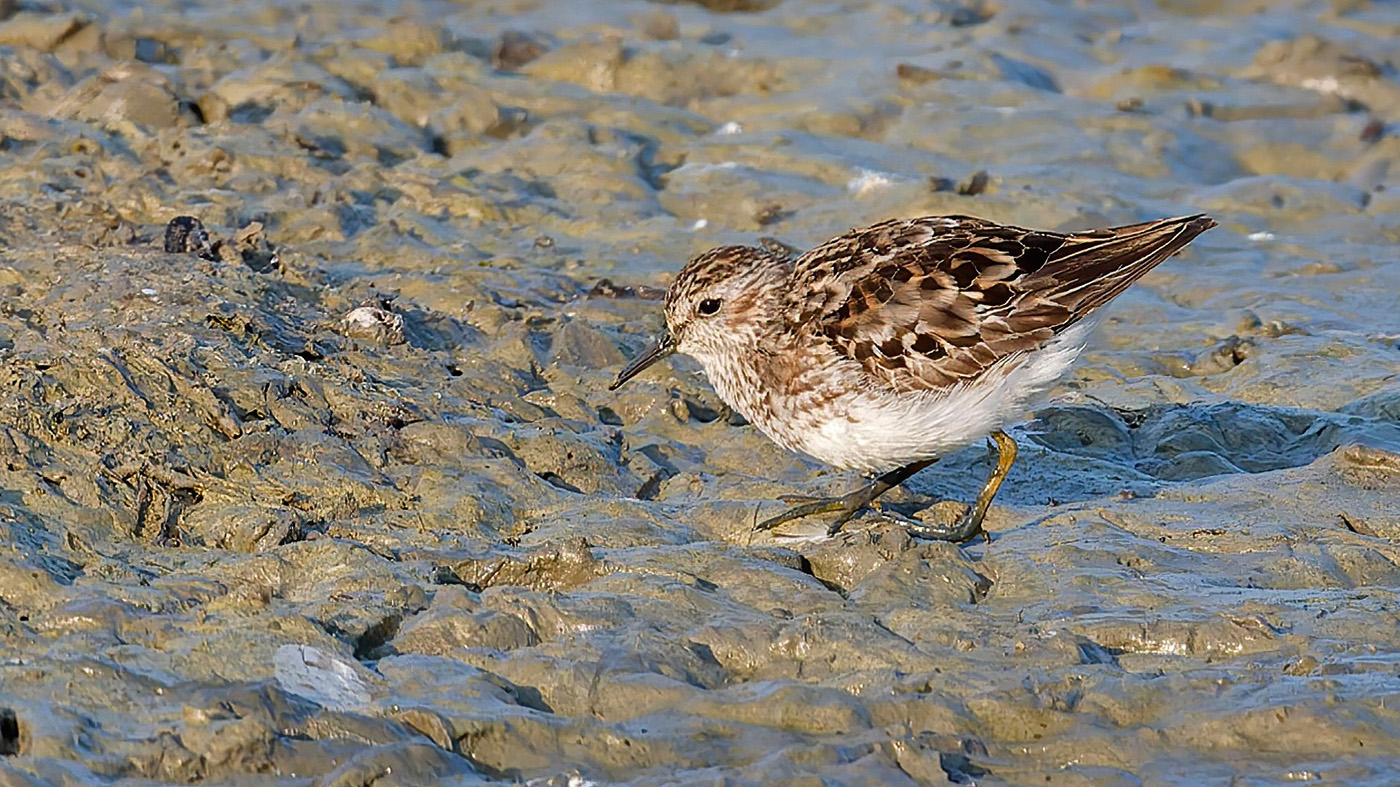 Least Sandpiper Calidris minutilla, Uitkerke, Belgium, 1 August (Eduard Sangster)
The star bird of the month in Belgium was a first-year Saker Falcon, discovered at Zuienkerke, Flanders, on 20 August. It was subsequently seen sporadically, but from 26 August its pattern was finally cracked and the bird was seen daily in and around Het Zwin, near the Dutch border. From 26 August it was also seen intermittently over Dutch territory. This was the first record for Belgium and the second for the Netherlands, following a July 2019 record.
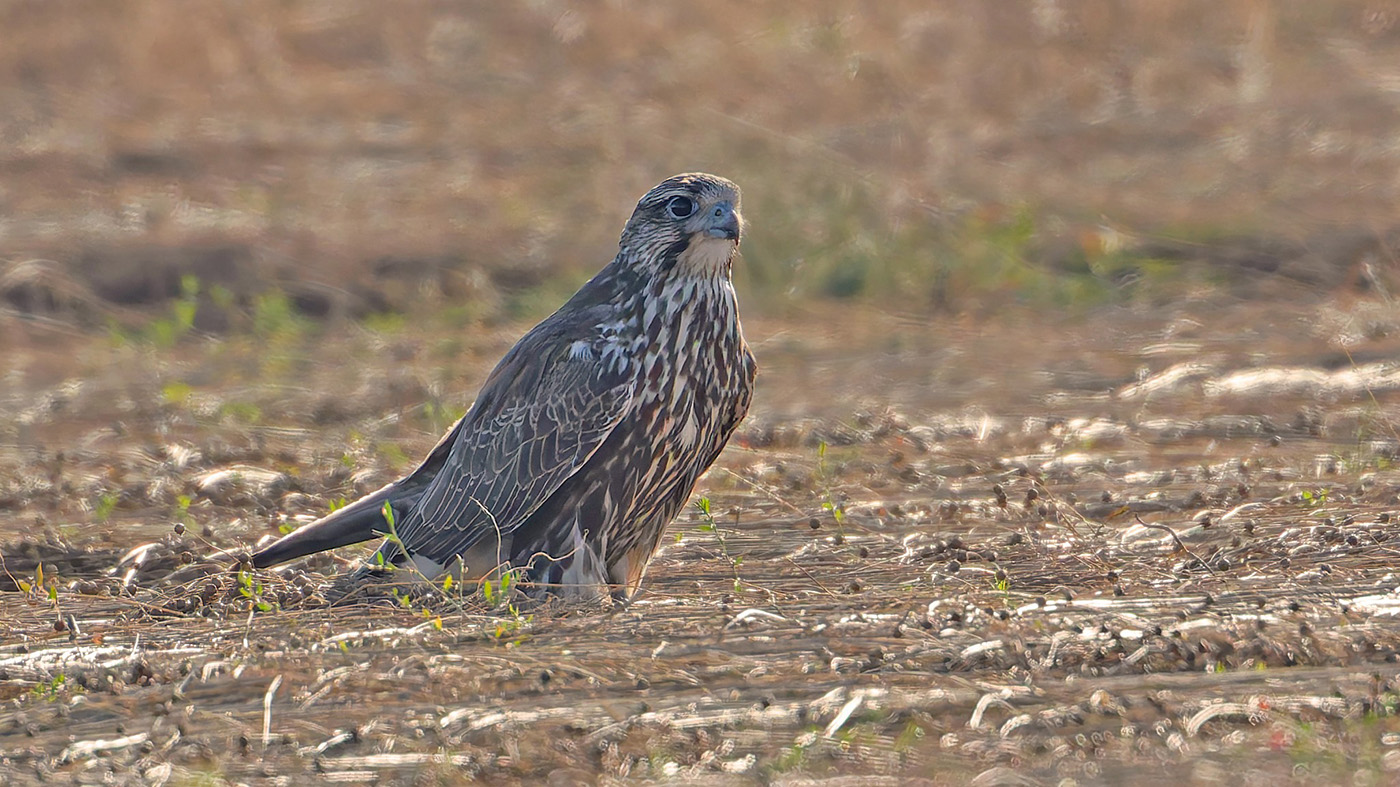 Saker Falcon Falco cherrug, Het Zwin, Belgium, 29 August (Julien Hainaut)
This dazzling bird deserves a second photo!
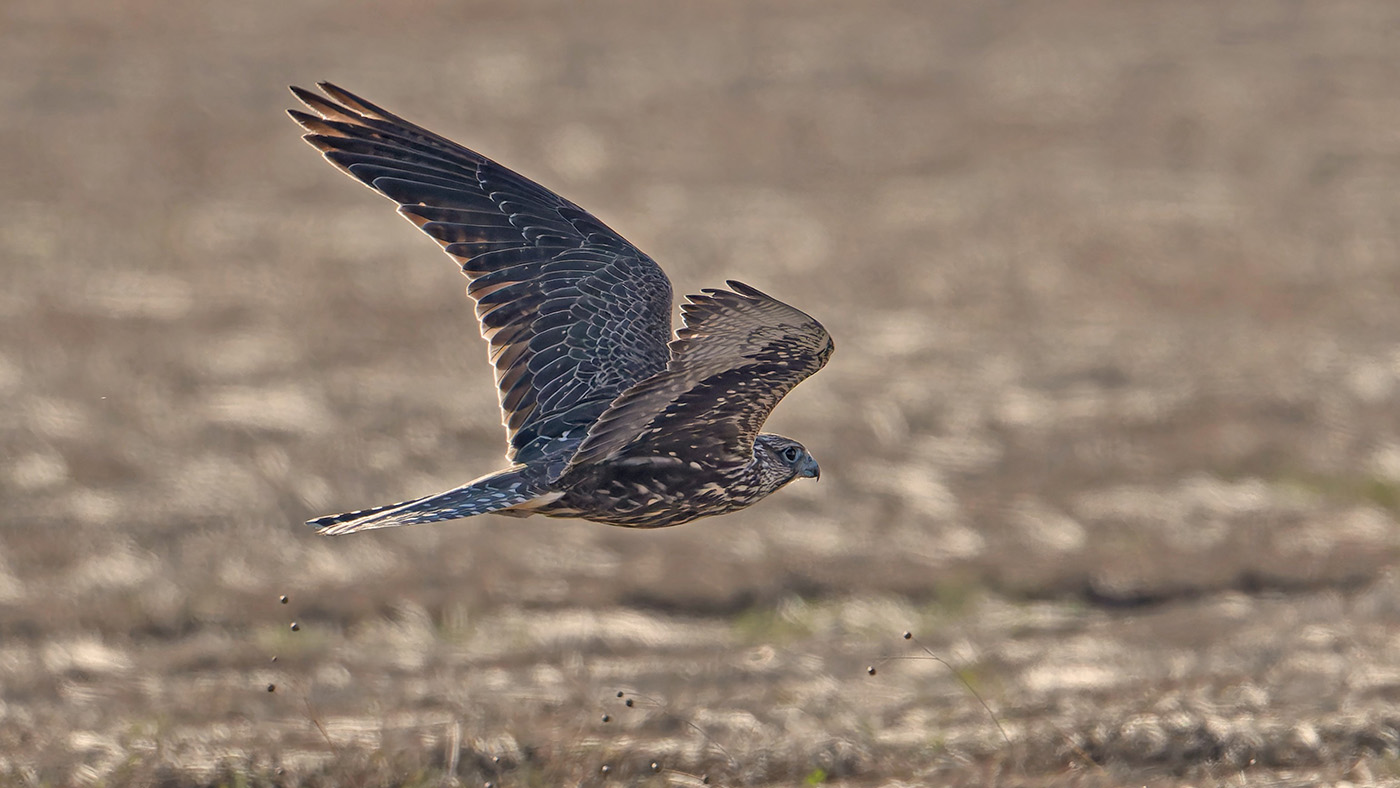 Saker Falcon Falco cherrug, Het Zwin, Belgium, 29 August (Julien Hainaut)
The Netherlands
Besides the Saker Falcon, this month’s highlights included a Sharp-tailed Sandpiper, which was seen briefly on 8 August at Rottumerplaat, a location inaccessible to the public.The country’s second Red-necked Stint of the year, present on 19 and 20 August, proved to be the first ever to stay for more than one day. It chose one of the most inaccessible, yet accessible, spots in the Netherlands: the Boschplaat on the island of Terschelling. To reach it, you have to drive up north, take a two-hour ferry, cross the island and then cycle for another hour along a very wobbly track, which some birders have dubbed the ‘abortion path’. Of course, we Dutch realize that this is nothing compared to the challenges birders face in other countries.
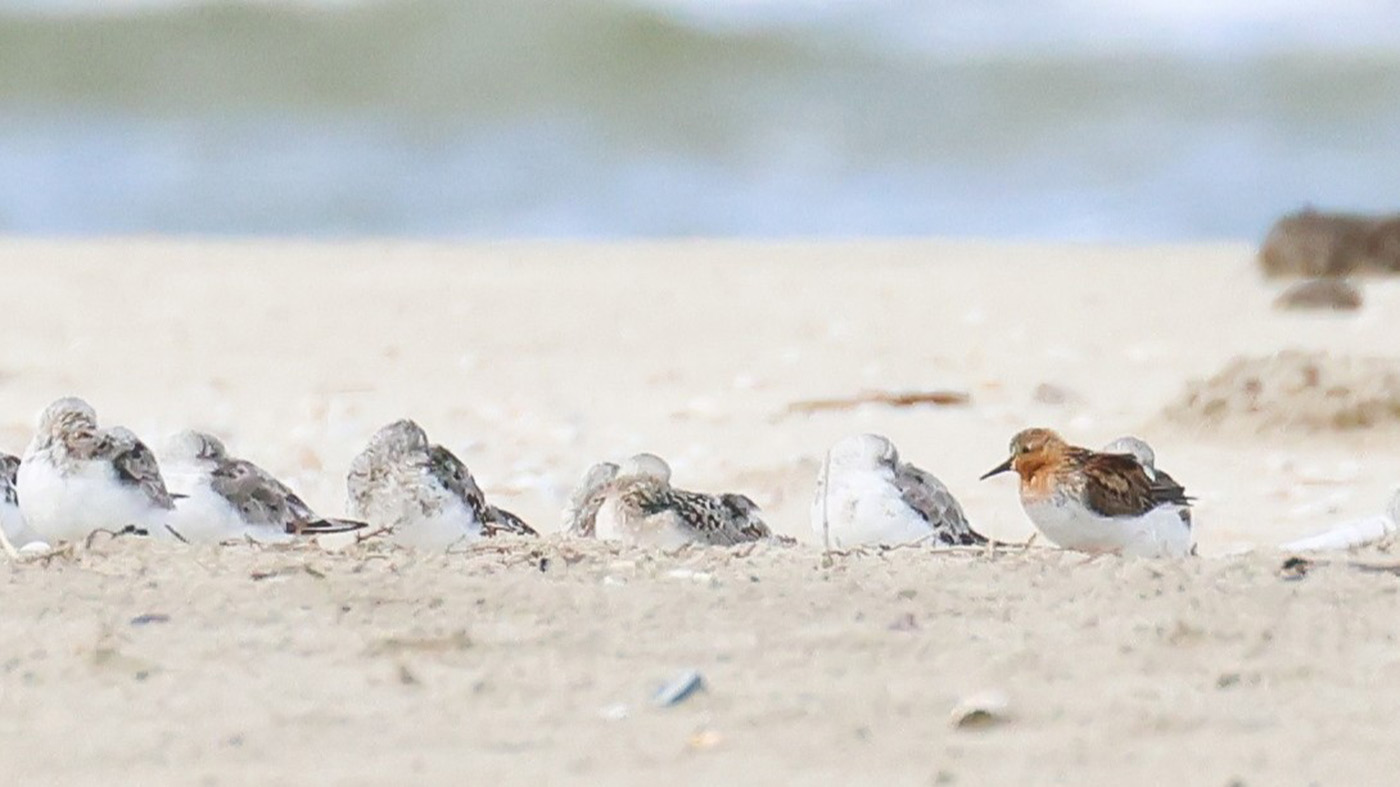 Red-necked Stint Calidris ruficollis, Terschelling (Fr), The Netherlands, 19 augustus (Robin Drenth)
Eastern Europe
An Indian Pond Heron was discovered in Kaunas, Lithuania, on 5 August. The initial thought is perhaps that it was an escape, but the record fits a pattern of sightings in Finland in August 2016 and Germany in June 2021. Those records were not accepted, but perhaps deserve a second chance. To date, the only Category A records in the WP come from Kuwait (two) and countries on the Arabian Peninsula. Could we be witnessing another influx of Two-barred Crossbills in Central Europe? The 22 birds in Poland since 21 August and four records in Germany are positive indicators for the first influx since 2013. The American and European taxa will most likely be split into two species. This appears to be a well-supported split, with records of the American nominate in the WP bird in Iceland (three) and the Azores (one). Random photography – or should we call it accidental photography, or even serendipity photography? After returning home, Finnish birders spotted this sandpiper among their flight photographs of waders, taken on 28 July at Haversi, Estonia. It appears to be a White-rumped Sandpiper and, if accepted, this will be the first record for Estonia. A Levant Sparrowhawk was seen on 26-27 August at Hortobágy, Hungary.Southern Europe
On 3 August, 106 Bulwer’s Petrels flew past Estaca de Bares, the famous seawatching site in northern Spain. The previous record of 10 birds was completely obliterated. South Polar Skuas were recorded on six different days at seawatching sites in northern Spain, with one bird on each day. Not far away, the Moroccan satellite-tagged White-backed Vulture continued to roam around. The Cape Gull was still present in the harbour at Laredo. The eighth record, and only the second twitchable individual, of Lanner Falcon was seen in mid-August at Castro Verde, Portugal. 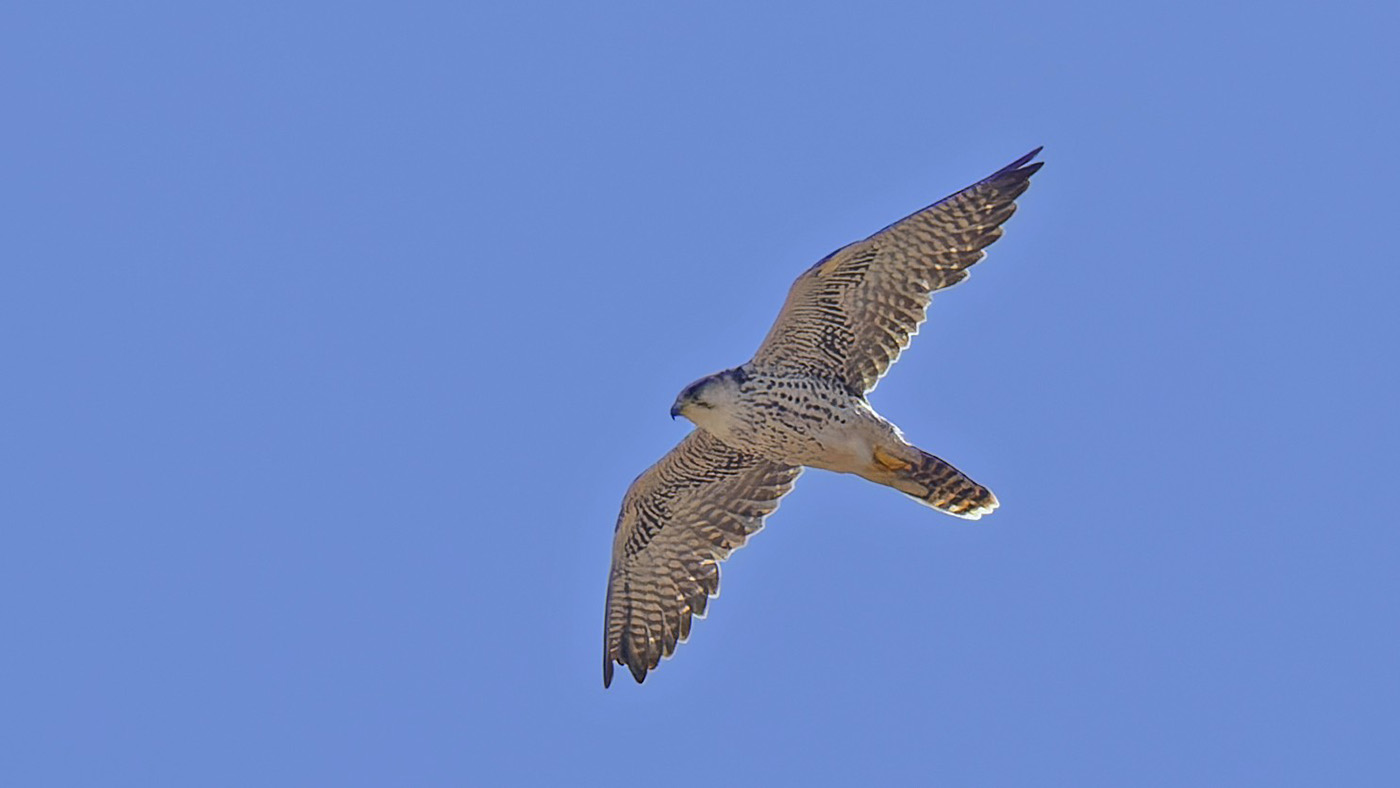 Lanner Falcon Falco biarmicus, Castro Verde, Portugal, 15 August (Vasco Valadares)
Italy’s second Rüppell’s Vulture has been present since 26 August at Lago di Cornino, close to the Austrian border. It regularly ventures north, so keep your eyes open, Austrians!
North Africa
For a long time it was unclear to which taxon the storm petrels of São Tomé belonged, but this study shows that the birds represent a new subspecies of Cape Verde Storm Petrel, named mito. The birds differ from the nominate by their longer, thinner, downcurved bill and narrower rump band. One Masked Booby was still present in early August in the Brown Booby colony on Brava. The bird had a nest containing one egg and was probably paired with a Brown Booby. A second Masked Booby was present in the colony from March-May, but has not been confirmed since.
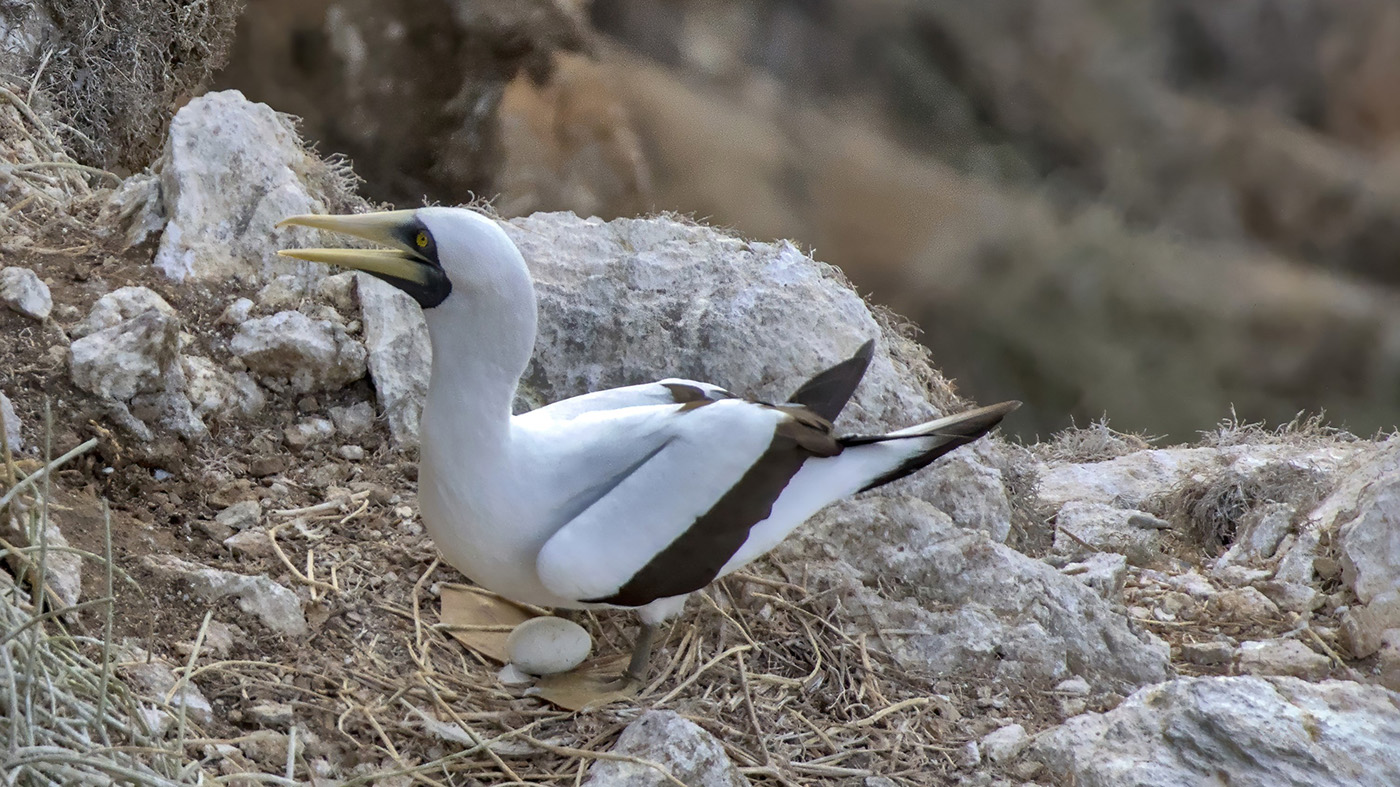 Masked Booby Sula dactylatra, Brava, Cape Verde, 6 August (Lasse Lehmann)
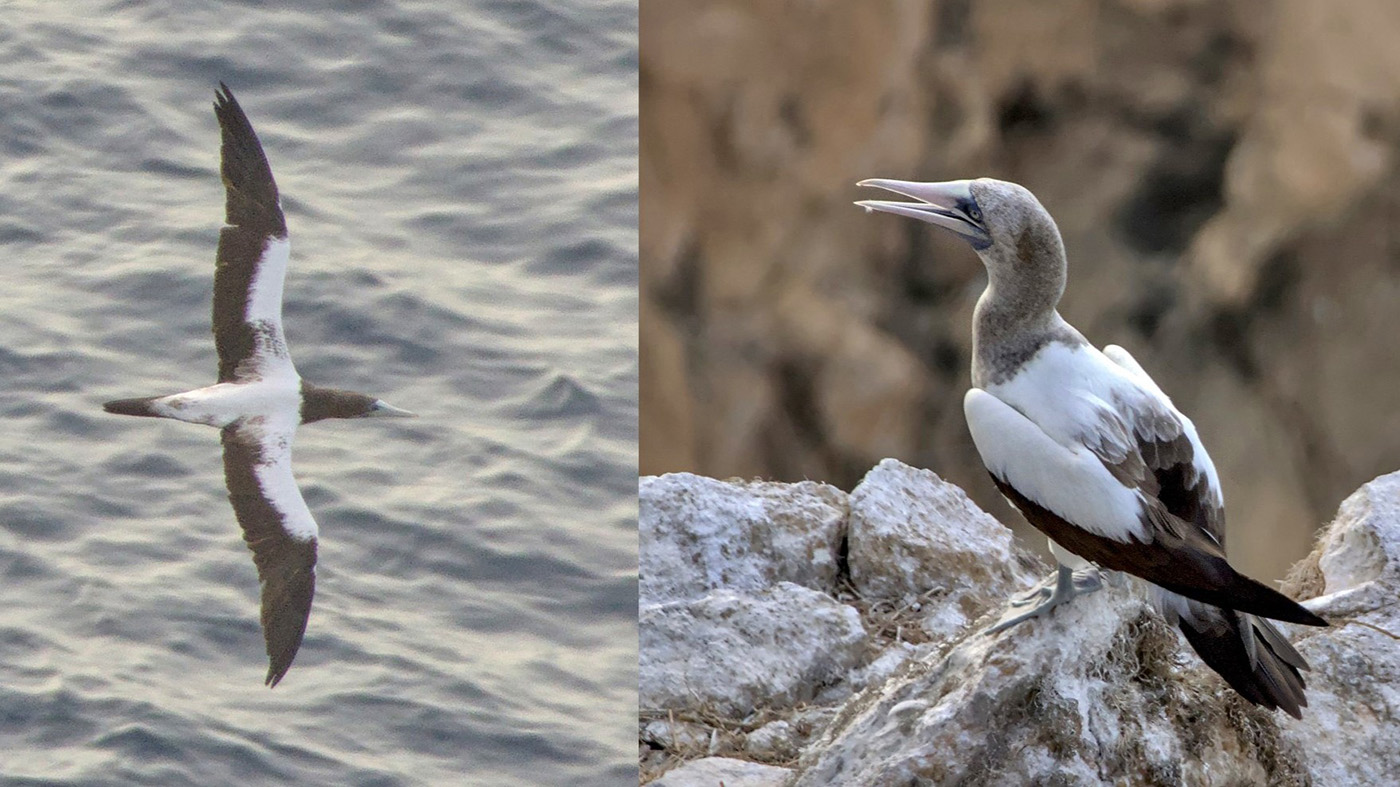 Masked Booby x Brown Booby Sula dactylatra x s. leucogaster, Cape Verde, 6 August (Lasse Lehmann)
Sad news from Algeria, where on 26-30 August extensive fires destroyed large parts of prime habitat of the Algerian Nuthatch near Jijel, a key site for this endemic. It is too early to determine the precise impact on the population of the species.
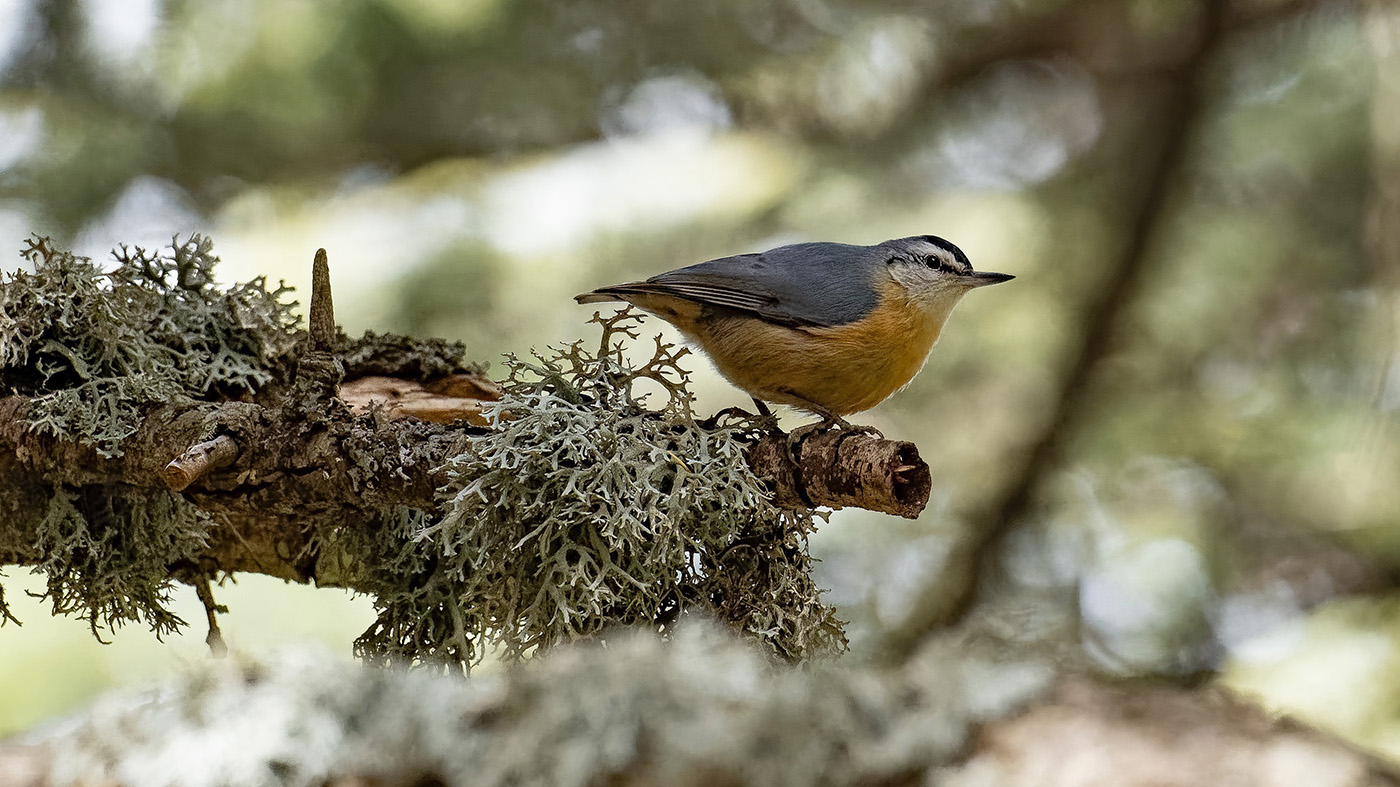 Algerian Nuthatch Sitta ledanti, Algeria, 9 May (Leo Boon)
Middle East
No Swinhoe’s Storm Petrels have (yet) been recorded on pelagic trips from Eilat this summer, unlike in recent years. At last, a Yellow-billed Egret was confirmed on the Arabian Peninsula, with a summer-plumaged individual at Jizan Lake, Saudi Arabia, on 7 August. This supports the assumption that the birds along the southern coast are predominantly African birds, while those along the northern coast of the peninsula and in Oman are mainly Asian Medium Egrets. A fine Variable Wheatear was seen in Kuwait from 24-26 August. This constitutes the fourth record for the country and the fifth record for the ‘small WP’.
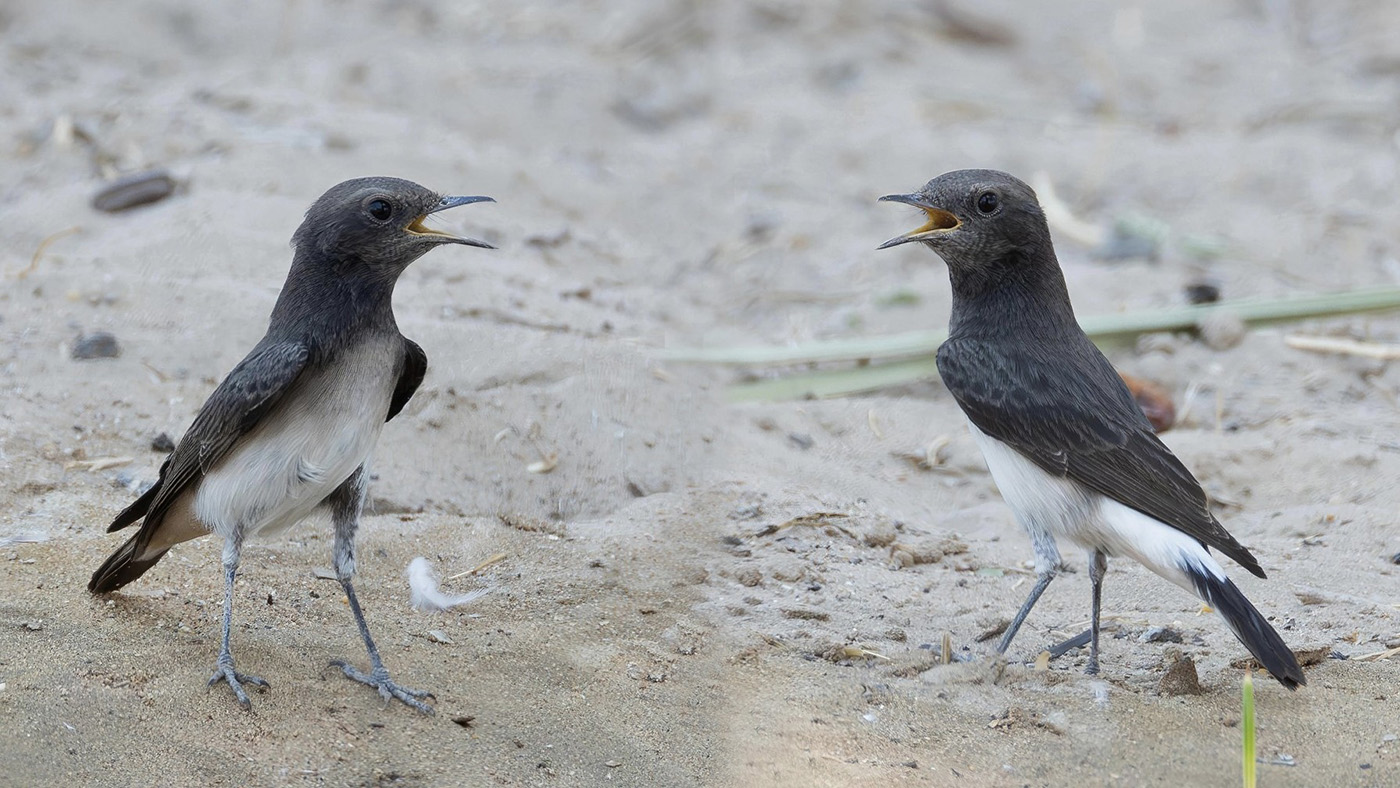 Variable Wheatear Oenanthe picata, Mutla's Ranch, Kuwait, 24 August (Mohammed Alazmi)
The Crystal Ball - September
Had this section been written 160 years ago, we would have recommended looking out for odd-looking curlews, as they could easily have been Eskimo Curlews. September was the best month to find this species in the WP, with all four UK records occurring during this month, between 1855 and 1887 on the Isles of Scilly and in Scotland. The only other WP record was from Ireland in October 1870. The last confirmed sighting of Eskimo Curlew anywhere in the world was a bird shot in Barbados in 1963. It is therefore a bit strange that Birdlife International lists the species as Critically Endangered rather than Extinct, as it does with Slender-billed Curlew, which was seen as recently as 1995. The following is known about the first WP record of Eskimo Curlew, on 6 September 1855 at Cairn-mon-earn, Durris Forest, Grampian, Scotland: the bird, initially believed to be a Golden Plover, was standing on a stone cairn. Appearing reluctant to fly, it made an easy target when shot from as close as 20 yards. The carcass was sent to an Aberdeen taxidermist for preservation, and a few days later the bird was identified as an ‘Eskuimaux Curlew’. More fascinating stories about first records in the WP can be found in this wonderful book by Joe Hobbs – highly recommended! Below is one of only four photographs ever taken of a living Eskimo Curlew , all taken in March-April 1962 on Galveston Island, near Houston, Texas, when two individuals were present there.
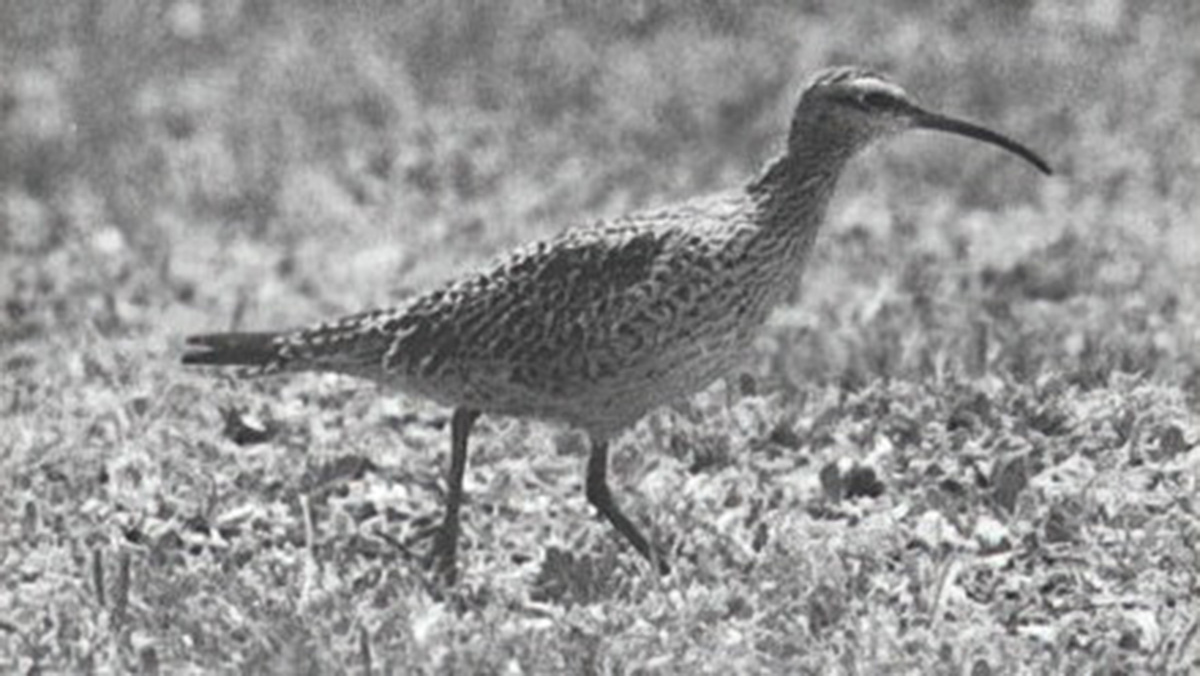 Eskimo Curlew Numenuis borealis, Galveston Island, Houston, Texas, USA, 25 March 1962 (Don Bleitz)
Returning to the present day, September is a month when anything can happen. Take, for example, the only WP record of Hooded Crane, in Russia in September 2023. The only record of Horus Swift was also in September, a few years ago in the Netherlands. A species that has not yet been recorded in the WP but is certainly within the realms of possibility is Marbled Godwit. If one is ever discovered here, September would be the most likely month.
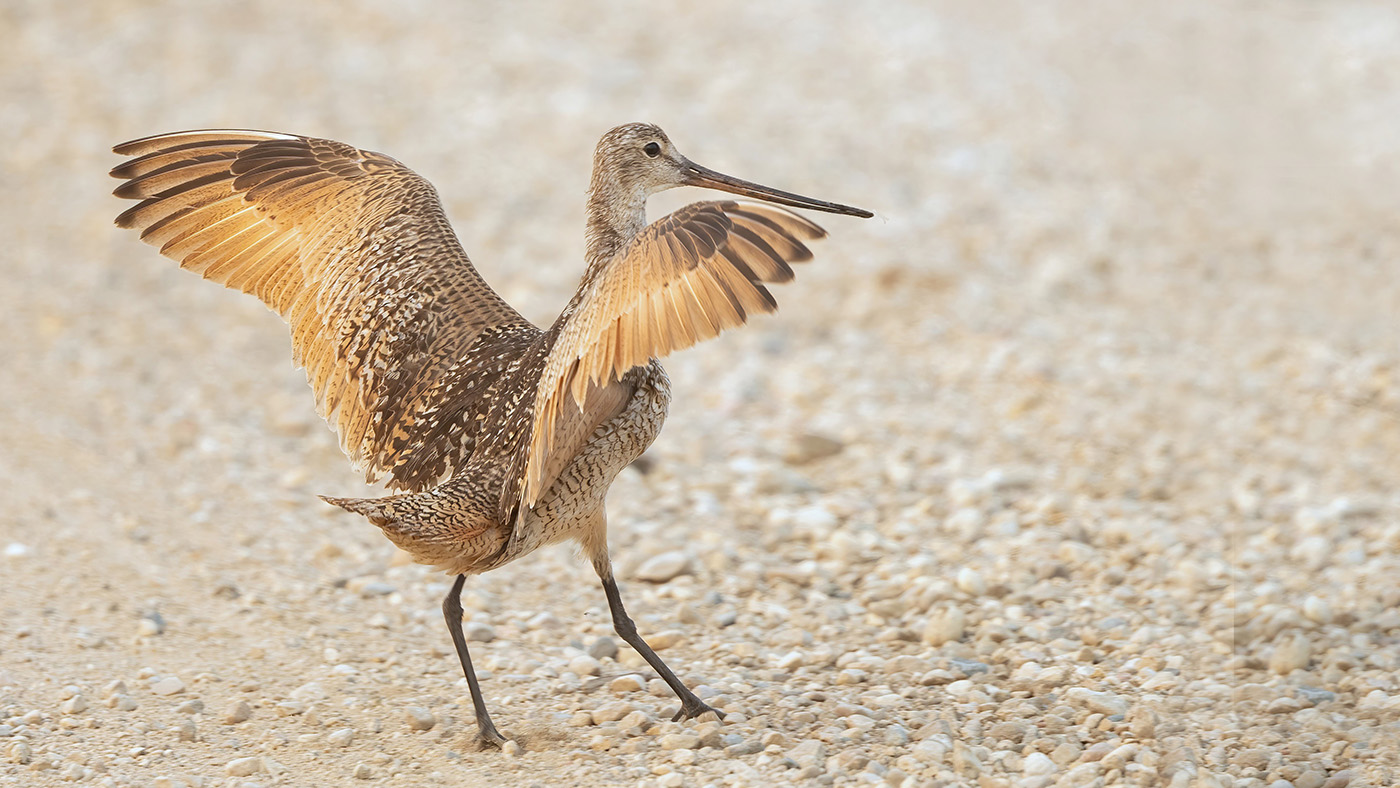 Marbled Godwit Limosa fedoa, Dauphin, Canada, 10 July 2024 (Eduard Sangster)
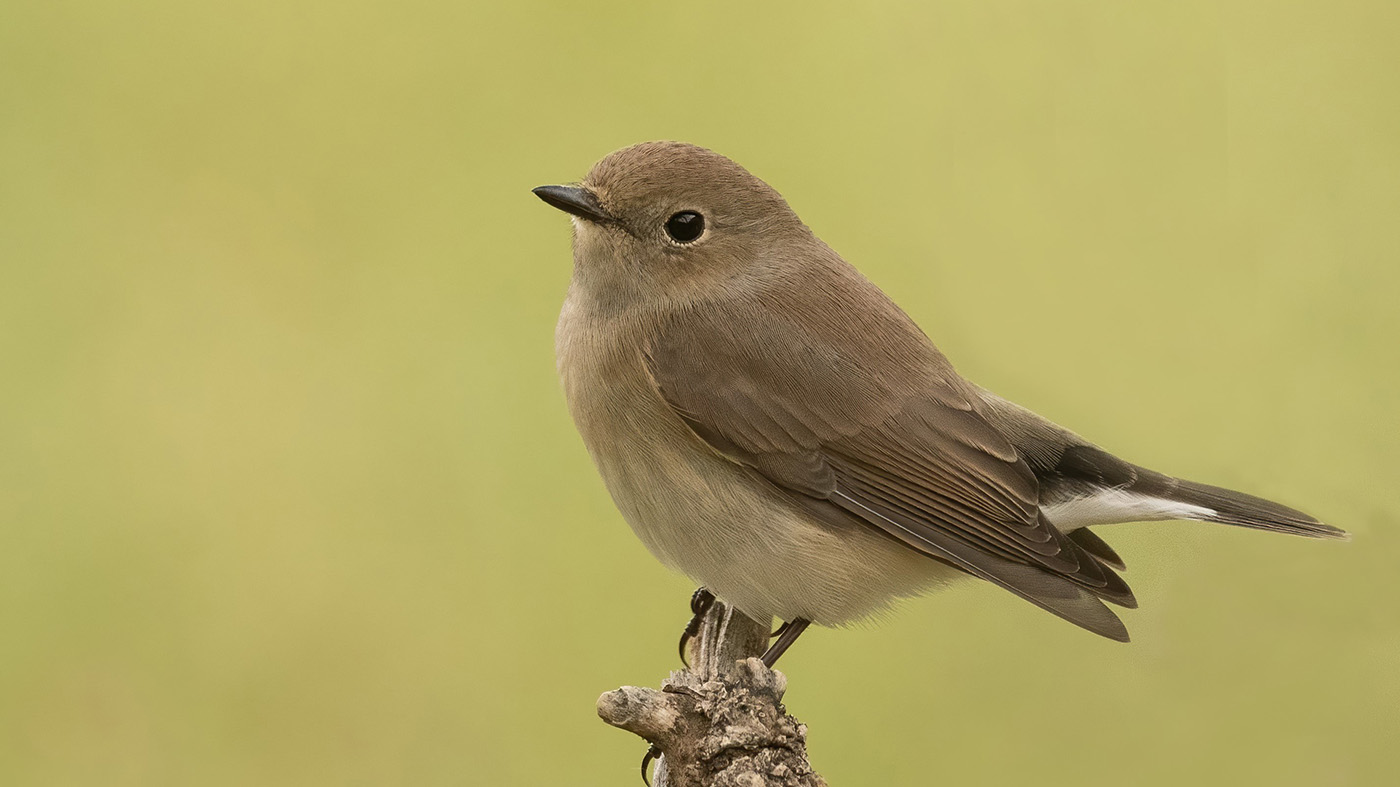 Taiga Flycatcher Fidecula albicilla, Khalzan, Mongolia, 10 September (Eduard Sangster)
We would like to thank all observers and photographers for their contributions to this report.
Eduard Sangster & Wim WiegantDiscussie

Eduard Sangster
·
6 september 2026 10:06
Wim (section Netherlands and formatting) and I (section WP) would like to express their gratitude to Garry Bakker for his meticulous fact-checking, and to Toy Janssen for his dedicated work on the ICT issues. Highly appreciated!
Peter de Knijff
·
6 september 2026 17:38
Die Roodkeelstrandloper foto is wel extreem getopazzed vind ik. Dan liever klein maar fijn.

Folkert Jan Hoogstra
·
6 september 2026 22:17
Prachtig overzicht en ik kom altijd weer waarnemingen van soorten tegen die ik de gehele maand niet via andere bronnen heb gezien. Ga zo door!

Simon Feys
·
7 september 2026 08:57
Heel fijn om te lezen inderdaad, hopelijk komen de voorspellingen uit :-)!
Eduard Sangster
·
7 september 2026 15:44
Peter, ja, eens, foto is vervangen.
FJ, dank je wel, we doen ons onbezoldigde best ;)
Simon, dank je wel, laten we hopen! De vorige keer is aardig uitgekomen met de Sakervalk...:)
Gebruikers van het forum gaan akkoord met de forumregels.